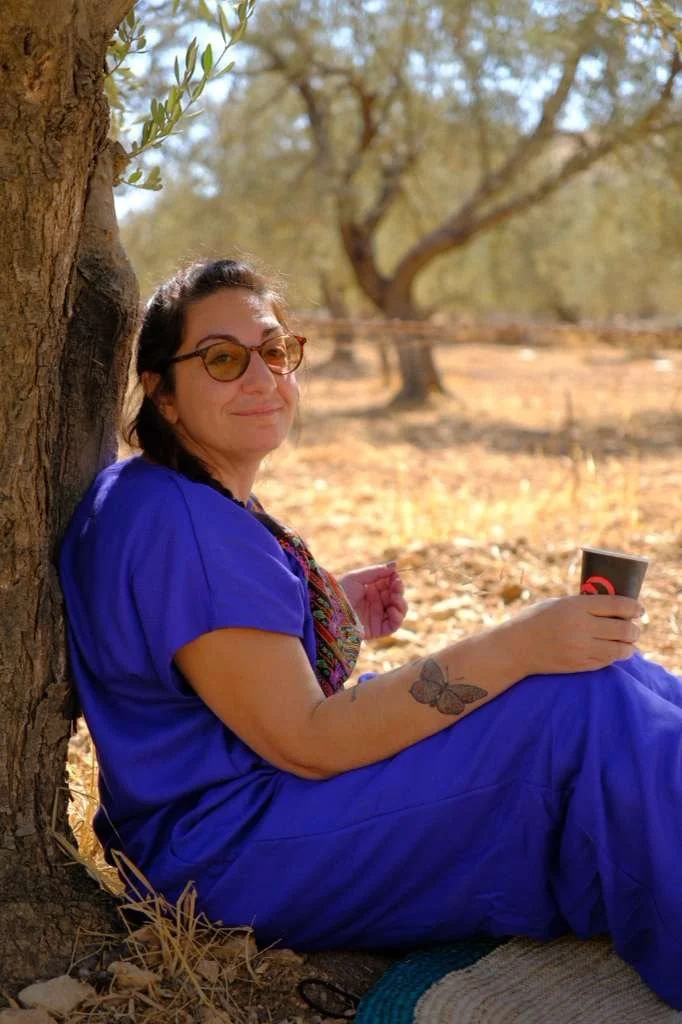
Meet Dr. Shirin Zarqa-Lederman, LPC, LCADC
Welcome to The Diaspora Psychologist. I’m Dr. Shirin Zarqa-Lederman, PhD, LPC, LCADC, founder of The Diaspora Psychologist. My clients simply call me Dr. Shirin.
I’m an international counseling psychologist, researcher, and community psychologist specializing in trauma, diaspora, identity, and the ways history and culture shape our psychological lives. I am a Licensed Professional Counselor (LPC) and Licensed Clinical Alcohol and Drug Counselor (LCADC) in New Jersey.
My work has always existed at the intersection of individual experience and the larger communities and systems we live within. Before founding The Diaspora Psychologist, I coordinated adolescent substance use programs in New Jersey and New York, developed treatment curricula for group and family counseling, and served as a community liaison. Earlier in my career, I worked with children and families in their homes, an experience that profoundly shaped how I understand mental health. Sitting with families in their own environments made it impossible to separate individual distress from family history, culture, community, racism, displacement, and the conditions surrounding people's lives.
I earned my M.A. in Child and Adolescent Psychology and my Ph.D. in International Psychology with a concentration in Trauma Services from The Chicago School of Professional Psychology. During my doctoral training, I completed international field experiences in Ghana and Rwanda focused on culturally responsive approaches to trauma. I also coauthored The Story of Amal with the Refugee Working Group as a resource to help refugee children experiencing anxiety.
Research
My research focuses on Palestinian diaspora, forced displacement, identity, social memory, return, generational trauma, and community resilience. As a Palestinian American researcher, I am particularly interested in what happens to people and communities when displacement extends across generations and in the cultural practices, relationships, land based knowledge, stories, and collective memories through which communities maintain connection.
My doctoral dissertation, Descendants of Palestine: Exploring the Right of Return in Diaspora, examined how Palestinian Americans understand and experience the Right of Return across generations. Using photovoice and interpretative phenomenological analysis, the research explored social memory, identity, acculturative stress, intergenerational experience, and the psychological meaning of return.
That research did not end with my dissertation. It became the foundation for an ongoing body of community based scholarship examining Palestinian life across the diaspora and in Palestine. My more recent work explores social ecological memory, the Palestinian olive harvest, relationships to ancestral land, cultural and agricultural practices, and the ways return can move from an inherited idea into a lived experience. I have conducted research and community work in Palestine and across diaspora communities, including participatory projects that use photography, storytelling, immersive media, and lived experience as forms of knowledge.
My scholarship also asks a larger question: What does psychology look like when we move beyond simply documenting trauma and begin studying the practices through which communities survive, resist erasure, reconnect, and create continuity across generations?
This perspective informs my writing, community psychology work, workshops, listening circles, and collaborations with organizations serving Palestinian, Arab, Muslim, refugee, and diasporic communities.
Counseling
My research and community work directly shape how I practice counseling. I use a community psychology framework alongside experiential and narrative approaches, understanding that what happens inside us is often connected to what has happened around us, before us, and to the communities to which we belong.
Counseling with me may also move beyond words. Depending on the person and what feels meaningful to them, our work can incorporate cultural and creative practices such as soap making, tatreez, writing, storytelling, or other activities that reconnect people with identity, memory, and community. These practices are not additions to the “real” work of counseling. For many people, particularly those navigating diaspora and generational trauma, they are part of the work.
Through telehealth and in person counseling, I work with adolescents, young adults, adults, and families navigating trauma, anxiety, depression, cultural identity, acculturation, generational conflict, diaspora experiences, and the complexities of belonging to more than one cultural world.
I am a member of the American Middle East and North Africa Psychological Association (AMENA Psy) and the American Counseling Association (ACA).
Writing and Public Scholarship
Outside of counseling, I am a writer, researcher, educator, and storyteller. My scholarly and public writing explores Palestine, diaspora, social memory, identity, trauma, community resilience, and the psychological consequences of displacement and political violence.
I am also the author of The Trotters of Tweeville, a children’s book series centered on kindness and positive social skills. The series is a two time Mom’s Choice Award® winner and has been donated to children’s libraries around the world. My essays and commentary have appeared in publications including MissMuslim NYC, Story Monsters Magazine, and The Meteor, and I have contributed psychological expertise to media outlets including Care.com and Jezebel.
The Diaspora Psychologist grew from the belief that psychology does not have to begin and end in a counseling room. Our histories, families, communities, migrations, languages, cultures, and relationships to place all matter. My work brings those pieces together through counseling, research, community psychology, and storytelling.
Whether you are seeking counseling, interested in my research, or looking to collaborate on a community project, my goal is the same: to create spaces where people can understand their experiences within the larger stories they come from and imagine what comes next.